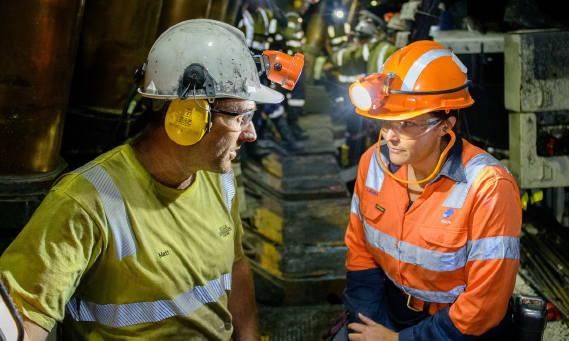
Noise is one of the most common – and most underestimated – hazards in the mining and energy industries. Prolonged or sudden exposure to high noise levels can cause permanent hearing loss, tinnitus, and other long-term health problems. Once damaged, hearing cannot be restored. That’s why strong noise-control measures and consistent use of hearing protection are
essential for every worker on site.
The MEU is committed to eliminating unsafe noise exposure across the industry and holding employers accountable for providing safe, compliant, and properly maintained workplaces.
What is a Noise Hazard
Noise becomes a hazard when it’s loud, constant, or sudden enough to cause permanent hearing damage or interfere with your ability to work safely. In the mining and energy sectors, noise is one of the most common and underestimated workplace risks.
Common sources of hazardous noise include:
- Drilling, blasting and cutting equipment
- Conveyors and crushers
- Generators and turbines
- Heavy vehicles (trucks, bulldozers, loaders)
- Compressed air and pneumatic tools
- Ventilation systems
- Steam release and gas venting
How do you know if noise is affecting your hearing?
You may be experiencing noise-related hearing issues if you:
- Frequently struggle to hear conversations, especially in groups or noisy environments
- Experience ringing, buzzing, or humming in the ears (tinnitus)
- Need to turn up the volume on devices higher than you used to
- Notice sounds becoming muffled or distorted
- Have trouble hearing high-pitched noises
- Experience temporary hearing loss or “fullness” in the ears after a shift
Noise exposure on site can come from a range of sources; drills, crushers, haul trucks, conveyor systems, generators, blasting, and even wind noise when travelling in open vehicles.
Noise Levels
- 85 decibels (dB) averaged over an 8-hour shift, or 140 dB at any moment, is the legal limit in Australian jurisdictions
- If you need to shout to be heard at arm’s length, it’s likely too loud
- Short-term exposure to levels above 140 dB (e.g. blasting, hammering) can cause immediate, irreversible hearing damage
Why is noise dangerous?
Noise is a serious workplace hazard. In mining and energy, excessive noise increases risk in
several ways:
- Permanent hearing loss can occur from long-term exposure to moderately high noise levels or from a single sudden loud event such as a blast.
- Tinnitus (ringing in the ears) can be constant and debilitating.
- Reduced situational awareness – workers may not hear alarms, radio calls, reversing beepers, approaching vehicles, or emergency instructions.
- Communication breakdowns can lead to serious accidents during lifting operations,traffic management, and high-risk maintenance tasks.
- Long-term health impacts, including stress, fatigue, and reduced mental wellbeing, are all linked to excessive noise exposure.
In high-risk environments where split-second decisions matter, impaired hearing can cost lives.
Managing noise: employer responsibility
Under WHS laws and regulations:
- Employers must assess and control noise risks at the source
- Workers must be consulted on safety matters, including noise exposure
- Hearing protection must be provided free of charge (PPE is the last line of defence, not the first)
- Employers must provide regular audiometric testing where workers are exposed to hazardous noise levels
Noise is a workplace hazard that requires structural, engineering, and administrative controls.
Employers have a duty to minimise noise exposure by:
- Conducting regular and accurate noise assessments across all worksites
- Installing engineering controls such as sound barriers, enclosures, dampening systems, and vibration isolation
- Maintaining equipment to prevent unnecessary noise from wear or mechanical faults
- Designing rosters and task rotations that limit prolonged exposure
- Providing compliant hearing protection that matches exposure levels
- Training workers to recognise noise hazards and report issues
- Consulting with workers and MEU representatives on safe operating procedures and exposure standards
- Responding immediately when workers report excessive noise or faulty equipment
The MEU continues to push for world-class noise management standards across the industry, ensuring employers cannot ignore the long-term health of their workforce.
Managing noise: your role
Workers can also take important steps to protect their hearing:
- Wear the correct hearing protection (earmuffs, plugs, or dual protection as required)
- Ensure PPE fits properly and is in good condition
- Report damaged, worn, or ineffective equipment immediately
- Follow site noise-control procedures and stay out of restricted high-noise areas when not required
- Take regular breaks from noisy environments
- Look after your hearing protection. Keep it clean and store it correctly
- Speak up if machinery is excessively loud or deteriorating
- Seek a hearing test if you notice ringing, muffled hearing, or changes after a shift
Early action helps prevent permanent damage.
Getting organised
Workplaces with strong union representation are better equipped to enforce safe noise levels.
MEU safety reps and delegates:
- Ensure employers conduct proper noise monitoring
- Challenge unsafe exposure levels and excessive reliance on PPE
- Push for engineering controls and equipment maintenance
- Advocate for regular hearing tests and proper PPE supply
- Support workers who raise concerns about dangerous noise levels
Through collective action, workers can demand safer environments and prevent employers from
taking shortcuts on noise control.
Staying safe at work
If you are concerned about noise levels or hearing safety on your site, speak to your Delegate
or Union safety representative. No worker should suffer permanent hearing loss because an
employer failed to control a known hazard.