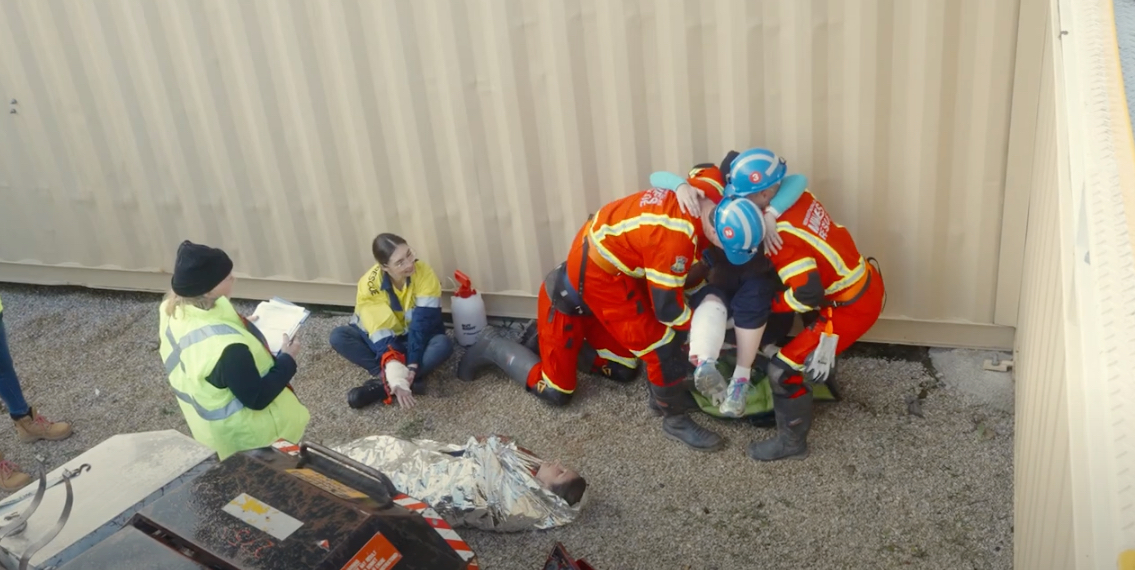
In coal mining, emergencies can escalate quickly.
That’s why mines rescue is not optional – it is a critical, life-saving system built into how coal mines operate.
Mines rescue teams are highly trained, site-ready crews capable of responding to fires, explosions, gas incidents, entrapments, and other serious emergencies underground and on the surface.
The Mining and Energy Union and our members are proud to support rescue services across the regions we work in, including the Westpac Rescue Chopper in the north of NSW and the CQ and CAP Rescue teams in Queensland.
They exist for one purpose: to save lives in regional and rural communities – that’s our members and their families.
What is mines rescue?
Mines rescue in the coal industry involves:
- specially trained workers who form part of rescue brigades
- dedicated rescue stations and equipment
- emergency response planning and coordination
- regular simulation training (including smoke and confined space scenarios)
- specialist capability in breathing apparatus, gas monitoring and underground conditions
These teams are trained to operate in some of the most dangerous environments imaginable – low visibility, toxic atmospheres, unstable ground and extreme heat.
Why mines rescue matters
Coal mining carries inherent risks, including:
- fires and spontaneous combustion
- explosions from methane or coal dust
- gas exceedances (e.g. methane, carbon monoxide)
- inrushes and flooding
- ground or strata failure
- vehicle and equipment incidents
When these events occur, time is critical.
A properly trained and resourced mines rescue capability can mean the difference between
a controlled incident and a fatal disaster.
Mines rescue in Queensland
In Queensland, coal mines are required to have access to a formalised mines rescue service.
This is delivered through organisations such as Queensland Mines Rescue Service (QMRS).
Key features include:
- compulsory membership for coal mine operators
- regionally based rescue stations
- emergency response capability 24/7
- structured training programs for brigade members
- provision and maintenance of specialist rescue equipment
Queensland legislation requires mines to maintain effective emergency response systems, including trained personnel, communication systems, and procedures for incidents involving gas, fire, or entrapment.
Mines rescue in New South Wales
In New South Wales, mines rescue is similarly formalised through Mines Rescue Pty Ltd.
The NSW system includes:
- mandatory provision of mines rescue services to coal operations
- multiple rescue stations across mining regions
- advanced training facilities simulating underground emergencies
- regular emergency exercises involving mine workers and management
- specialist response to gas, fire, explosion and confined space incidents
NSW also places strong emphasis on preparedness – including regular drills, incident command systems, and coordination with regulators and emergency services.
What workers should know
All coal mine workers should:
- know who their mines rescue personnel are on site
- understand emergency procedures and alarms
- participate in training and evacuation drills
- be aware of gas monitoring systems and triggers
- report any issues with rescue equipment or preparedness
If something doesn’t seem right – whether it’s equipment, training, or response readiness – it should be reported.
Mines rescue systems only work if they are properly maintained, properly trained, and taken seriously.
The union’s role
The Mining and Energy Union has long fought for strong, properly funded and independent mines rescue services.
That includes:
- ensuring rescue capability is not compromised by cost-cutting
- supporting training and safety standards
- advocating for best-practice emergency response systems
- backing workers who raise concerns about preparedness
History has shown that when safety systems are weakened, workers pay the price.
Your safety depends on preparedness
Mines rescue is the last line of defence in a coal mining emergency.
But it only works if everything is in place before something goes wrong.
Training. Equipment. People. Systems.
If any part of that chain is broken, lives are at risk.
If you have concerns about mines rescue capability at your site, speak to your delegate or contact the MEU.